
A lot of people still see accessibility as some last-minute thing they add. That mindset’s way out of date and if we’re being honest, it’s a bad play. The brands pulling ahead in 2026 figured it out early. Accessibility isn’t just about following rules anymore. It’s how you stand out. It says, “Hey, we actually care about your experience. We want you here, whoever you are.”
Making something for everyone is just good sense. Ignore big groups of people online, and you’re literally just giving away money. South Africa is a perfect case study. The country’s a patchwork of devices, spotty networks, different languages, and all sorts of abilities. If you don’t build digital stuff that works for all of that, growth just stalls.
For years, accessibility got buried in legal talks. Companies did the bare minimum, treating things like the Web Content Accessibility Guidelines (WCAG) as technical chores, not guiding principles. Those days are gone. People now expect accessible digital products. It’s a bit like opening a store. You can’t imagine not having a wheelchair ramp. Launch a website that isn’t accessible, and people see it as careless.
This shift isn’t just about laws, either. Yes, the European Accessibility Act went live in June 2025 and is pushing everyone to new standards. And in South Africa, even though The Promotion of Equality and Prevention of Unfair Discrimination Act never spells out digital rules, it’s already being cited to challenge exclusion online. So, waiting for the law to tell you what to do is a mistake.
Microsoft nailed it early. Their entire product ecosystem, from Windows to Xbox to Microsoft 365, is built with accessibility at the core. Satya Nadella, Microsoft’s CEO, put accessibility front and center as a core business goal. It paid off, resulting in the brand being trusted and loved across the board.

The internet’s got more variety than ever. The World Health Organization has reported that 1.3 billion people, or about 16% of the world, have a significant disability. In South Africa, the official numbers are smaller, but most local advocacy groups will tell you that counting’s far from perfect.
The real takeaway is accessibility isn’t just about disabilities. It’s about parents using one hand with their phone, or commuters squinting at screens in bright sunlight, or someone on 3G in the middle of nowhere. The more accessible your site, the better it works for actual life, especially life in a place like South Africa.
Vodacom’s a good example. In 2023, they reworked their self-service app with accessibility and low-data use in mind. Many customers have cheap phones and not much data to burn, so Vodacom made everything simpler, clearer, and lighter. Everyone benefited, and customer service calls dropped.
Why Accessibility Impacts Brand Perception
Accessibility builds trust. If someone can use your site easily, whatever their device or ability, they come away thinking, “These people get it.” If they can’t, maybe they run into an image with no alt text or a video with no captions, they just feel left out.
It’s not just about that one customer either. They’ll talk, good or bad. In a world where brand trust is always on the edge, nailing accessibility helps you stand out. It tells people you care, you’re competent, and you sweat the details.
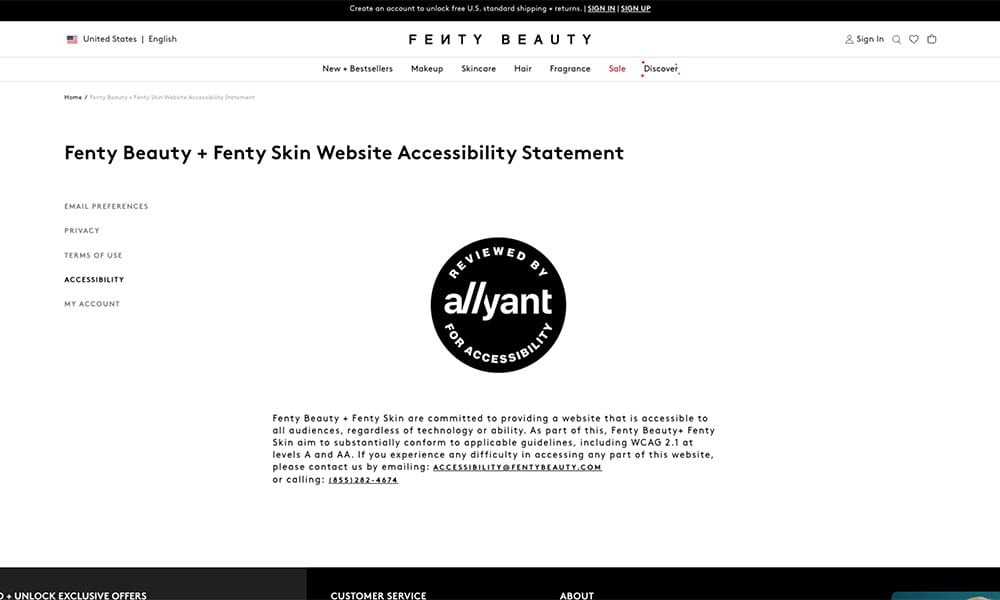
Look at Fenty Beauty. Rihanna didn’t just stop at offering an extremely wide range of foundation shades. The digital experience of the site itself was built for access with big, bold text, perfect contrast, descriptive alt on every image, captions everywhere. Add that to their inclusive brand, and bam, $550 million in year one. People felt seen and the business exploded.
People toss these terms around interchangeably, but they’re not the same. Accessibility is about checking technical boxes, making sure you hit WCAG, write solid HTML, and your stuff works with screen readers and keyboards. Inclusive design goes bigger, asking if you really think about every user, in every context, from the start.
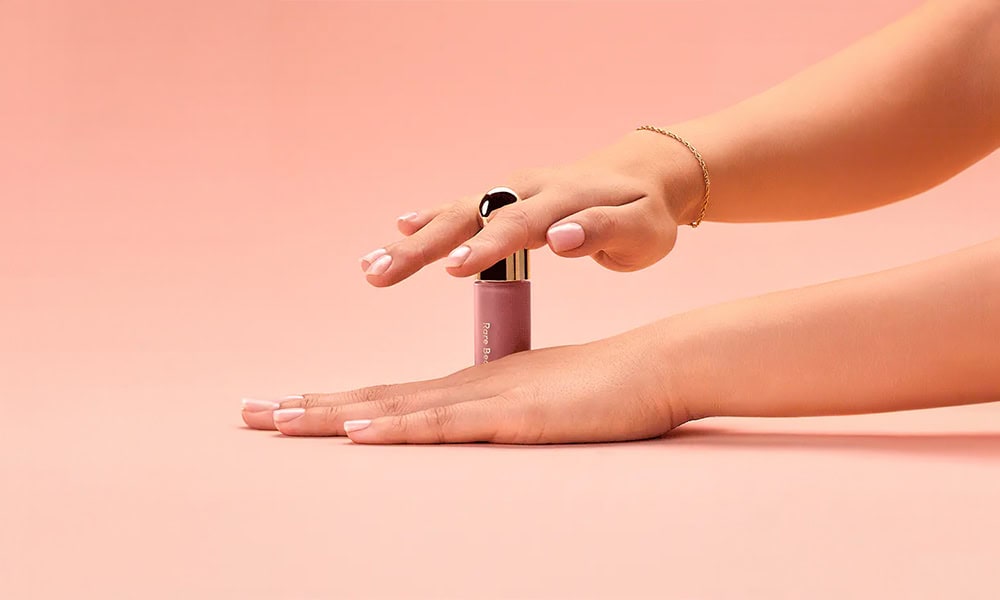
Rare Beauty does this well. Their website ticks all the accessibility boxes, sure, but their packaging makes it even clearer. Every lid is round and grippable, specifically to help people with limited mobility. This wasn’t an afterthought, it was baked in, giving a cleaner, easier experience for all.
Different disabilities need different solutions, whether it’s visual, auditory, motor, cognitive, you name it. For visual, use proper contrast, resizable text, real alt text. For hearing, your videos need captions. For motor challenges, make buttons big and simple, keep things accessible without a mouse. For cognitive, keep language plain, layouts clear, and navigation simple.
Capitec gets this. Their banking app has big buttons, clear layouts, plain language, and works comfortably even on basic smartphones. They also back up multiple languages in their official documents upon request, which is one reason 22 million South Africans chose Capitec.
Think about curb cuts in the sidewalk. They’re for wheelchairs but they help strollers, delivery people, luggage, and all sorts of people in different situations. The same thing can be done online. Captions are mostly used by people who aren’t deaf while high-contrast is great for everyone in sunlight. Easy navigation means less frustration for all.
YouTube’s auto-captions were invented for access, but 80% of users aren’t deaf, they just need the words. With English often a second or third language in South Africa, captions can make content way more accessible for everyone.
Making your product accessible doesn’t water it down. It actually makes it better for everybody.
Trust grows out of the little stuff. When your site or app is easy for anyone to use, people notice. If they can read the text, watch captioned videos, breeze through forms, they remember you made it simple. Those details stick and build brand loyalty your competitors can’t buy.
In South Africa, nobody gives away loyalty. You have to earn it. Accessibility proves you’re working for all customers, not just some. That matters more than any billboard ever will.
Accessible design unlocks a wider customer base. If it works for people with disabilities, for older users, for individuals with basic phones or weak connections, you’re reaching people others just overlook.
This is huge in South Africa, where many shoppers use small, slow, affordable phones. So, lean, clear websites are the key to winning. Plus, don’t write off older customers. With so many South Africans aging, needs shift. Their vision, memory, and how they navigate sites all aren’t how they used to be. Accessible design supports all of that, and opens a big market with strong buying power.
Online, it’s about standing out in the right way amongst all the saturation. Plenty of brands run louder ads or cheaper sales. Almost nobody makes their user experience radically better and more inclusive.
So, there’s room to move. Brands that commit openly to accessibility become known as forward thinking and actually caring. That draws in people who need accessible features and regular customers who just want to support good companies.
Showmax, which used to be a local streaming player (RIP), had made real improvements for access. These included easy-to-find subtitles, audio descriptions that aren’t buried, and the app held up even on shaky connections in several languages. That’s how you go from “just another streaming app” to being the top choice. Too bad they’re gone now.
This is the new baseline. Start now, and you’ll have an edge competitors can’t fake later.
Trying to fix accessibility at the very end is an expensive nightmare. Every fix will be harder, slower, and leaves people out in the meantime.
Instead, keep it in mind from day one. Designers, developers, and UX professionals all need to think about access from the beginning. It’s easier, cheaper, and you avoid scrambling to patch issues when the complaints start rolling in.
Apple really gets this. Every device is purchased with accessibility features including VoiceOver, Switch Control, AssistiveTouch, Live Captions already built in. These are not third-party add-ons accessibility features baked right in. Their teams include experts from the jump. Everything just works, for everyone, right out of the box.
Accessible design is all in the details. Here are the foundational elements that every digital product must get right:
Nobody can do this alone. Designers need to know their choices have real-world consequences. Developers should care about more than just code. Writers need to know how actual people, not just algorithms, hear and understand their words.
It’s easy for this to fall apart, like when a designer hands off great accessible mockups, then the developer forgets keyboard navigation. Suddenly, everything stops working for people on assistive tech.
Fix this with frequent reviews, team feedback, and real testing with people who have disabilities which is the most crucial step.
Shopify shows us how it’s done. Their design system, Polaris, weaves accessibility into every guideline. They audit their stuff and share results, so everyone’s on the same page and nothing slips through. The result is accessibility that sticks even as the product evolves.
When a person with a disability finds a brand that really understands them, it’s a big deal. It’s the feeling of being seen that actually gets them to shop. And they don’t just buy once and move on. They come back and they talk about it.
Word travels fast in a niche community. People share their great experiences and bad experiences too. When they feel shut out, that disappointment spreads even faster, and it can really sting a brand’s reputation.
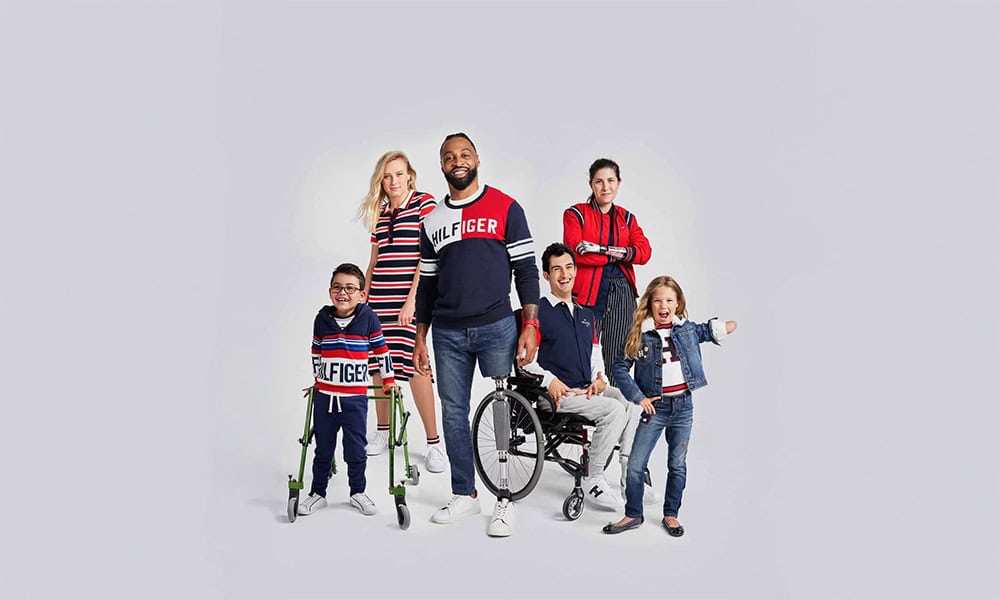
Take Tommy Hilfiger’s Tommy Adaptive line from 2018. Those clothes were made with magnetic buttons, adjustable hems, and necklines you can open easily, all thoughtfully made for people with disabilities. The website delivered too. It worked with screen readers, described products clearly, and featured models with disabilities. People loved it. The buzz turned into real advocacy. Brand loyalty grew not just to a product, but to the brand as a whole.
Accessible design creates a level of loyalty that ads simply can’t buy.
Tech evolves quickly. The apps and sites we use now could be gone next year. What sticks around are the basics of accessible design: clean HTML, clear paths to follow, visuals that work for everyone.
Focusing on accessibility gives your digital products a longer life. Good code is easier to fix, simpler to update, and it plays nicely with search engines, voice assistants, and whatever new tech comes next.
Samsung sees accessibility as a real investment in the future. Their SmartThings setup ties together everything. Its home appliances, wearables, phones, all built with accessibility features right out of the gate. That means assistive tech just works, no matter what device you upgrade to.
In South Africa, where Samsung pretty much dominates the Android market, you can really see this strategy at work. People can swap to a newer device or grab the latest Samsung release, and all those accessibility settings and experiences come right along for the ride.
Their “Relumino” app is a solid example of this approach. It helps people with low vision see what’s on their screens more clearly, and Samsung designed it to work smoothly across different generations of their products. Basically, it’s accessibility you can count on sticking around.
The bottom line is inclusive design shouldn’t be about checking boxes. We need to look at it as more market reach, improved SEO since search bots love tidy code, shrinking legal headaches, and growth in real loyalty. This will put your brand a step ahead.
You can actually measure how much it helps. The W3C Web Accessibility Initiative has the numbers, stating your audience gets bigger, your SEO score rises, you spend less on fixing things, and your brand’s reputation strengthens.
In South Africa’s busy digital world, where the audience is incredibly diverse, accessible design is necessary if you want to stay in the game. The brands that get this will lead. The rest will watch their audience drift away.
If you’re ready for digital experiences that include everyone, and actually help your business grow, let’s get started: https://darkm.co.za/